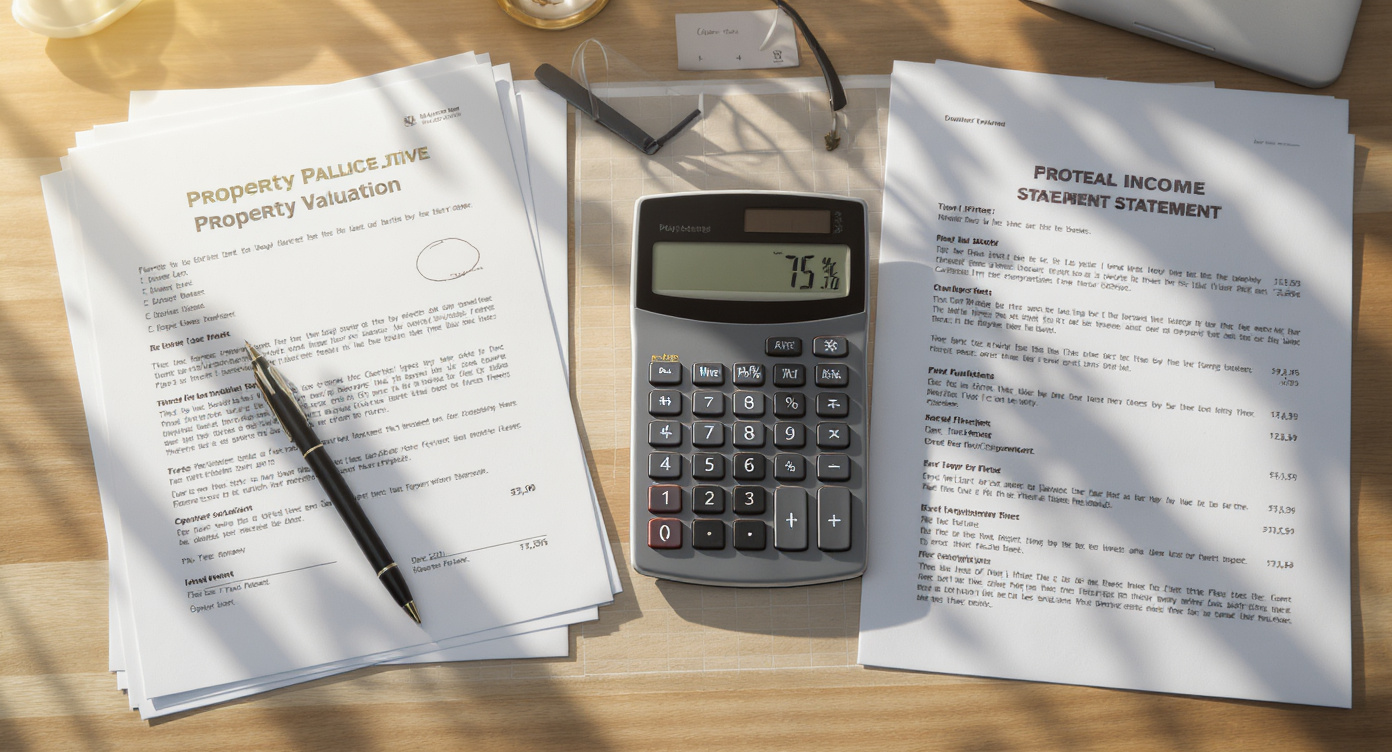
The short answer: A gross rental yield calculator divides annual rent by property value and multiplies by 100, showing raw income potential before expenses. Example: $30,000 rent on a $500,000 property equals 6% gross yield. Australian capital cities typically range 3-5% gross yield, while regional areas can reach 6-8%. It excludes rates, insurance, management fees, maintenance and vacancy, so treat it as a quick screening filter, then check net yield before deciding.
A gross rental yield calculator is the fastest way to determine if a property will generate meaningful income before you commit a dollar. It strips away the noise and shows you one critical number: annual rent divided by property value, expressed as a percentage. If you're weighing whether to rent where you want to live while investing elsewhere, a rentvesting calculator models the full financial picture beyond yield alone.
That percentage tells you whether the property pays its way or drains your cashflow every month.
Most investors chase capital growth and ignore yield until they're three properties deep and bleeding cash. The smarter approach? Run the numbers first. A gross rental yield calculator gives you that clarity in seconds, no spreadsheets, no guesswork, just the raw income potential of the asset.
This article breaks down how to use a gross rental yield calculator properly, what the numbers as it turns out mean for your portfolio, and why gross yield alone won't tell you the full story. You'll learn the formula, see real-world benchmarks across Australian markets, and understand when a property's yield is strong enough to support your next acquisition.
Property investment is about the numbers working before emotion enters the equation. The gross rental yield calculator is where that discipline starts.
A gross rental yield calculator measures the annual rental income a property generates as a percentage of its purchase price or current market value. The formula is straightforward: (Annual Rent ÷ Property Value) × 100.
If a property costs $500,000 and generates $30,000 in annual rent, the gross rental yield is 6%.
This metric exists to answer one question: how hard is this property working as an income-producing asset? A 3% yield means the property generates $3 for every $100 of value. A 7% yield means it generates $7. The difference compounds dramatically when you're holding multiple properties or servicing loans.
The gross rental yield formula requires only two inputs: total annual rent and total property value. Annual rent is the sum of 12 months of rental income at market rates. Property value is either the purchase price (for acquisition analysis) or current market value (for portfolio review).
Gross yield ignores all expenses, mortgage interest, council rates, insurance, property management fees, maintenance. It's a pre-expense benchmark that shows raw income potential before reality adjusts the number downward.
According to the National Association of Realtors' 2024 Investment Report, the average gross rental yield across US markets was 7.4%. Australian markets typically sit lower, major capital cities range from 3-5% gross yield, while regional areas can push 6-8%.
The calculator's simplicity is its strength. You can compare properties instantly without needing detailed expense breakdowns or financing structures.
Gross yield determines whether a property improves or constrains your borrowing capacity. Banks assess serviceability based on net income, but gross yield is the first filter that tells you if a property has any chance of being cashflow positive.
A property with a 3% gross yield will almost certainly be negatively geared once you add mortgage repayments, rates, and management fees. A property with a 6.5% gross yield has a fighting chance of being self-sufficient or better.
For investors building multi-property portfolios, this distinction is critical. Every dollar a property costs you per month reduces what you can borrow for the next one. A gross rental yield calculator shows you which properties support portfolio expansion and which ones cap it.
RentCafe's 2025 Rental Market Report found that Phoenix delivered a 9.2% gross yield while New York City averaged 4.1%. The Phoenix property generates more than double the income per dollar invested, before expenses, before financing, before tax.
Using a gross rental yield calculator to compare properties requires consistent inputs and realistic assumptions. The calculator only works if you feed it accurate data, inflated rent estimates or undervalued purchase prices will produce misleading yields.
Start with verified rental data from recent comparable leases in the same suburb and property type. A three-bedroom house in one street can rent for $50-$100 more per week than an identical house two blocks away depending on school zones, transport access, and street appeal.
Property value should reflect the actual purchase price including acquisition costs, or current market value based on recent comparable sales. Don't use optimistic valuations or outdated figures.
For a single property assessment, input the annual rent and purchase price into the gross rental yield calculator. If the property rents for $600 per week, annual rent is $31,200. If the purchase price is $550,000, gross yield is 5.67%.
That number tells you the property generates $5.67 for every $100 of value before any expenses are deducted. Whether that's strong or weak depends on the market, property type, and your portfolio strategy.
In Australian capital cities, a 5.67% gross yield on a house is above average. In regional Queensland or Victoria, it's mid-range. The calculator gives you the number, your market knowledge tells you if it's competitive.
BiggerPockets' 2024 Investor Survey of 5,200 active investors found that 8-12% gross yield is considered "strong" in US markets. Australian investors typically target 5-7% gross yield for houses and 6-8% for dual-key or multi-income properties.
The real power of a gross rental yield calculator emerges when comparing multiple properties. Run the calculation for each option and rank them by yield. A $450,000 property yielding 6.2% outperforms a $600,000 property yielding 4.8% on income alone.
But yield isn't the only variable. The $600,000 property might sit in a higher-growth corridor with stronger infrastructure and employment fundamentals. The $450,000 property might deliver better cashflow but weaker long-term appreciation.
This is where gross yield serves as a filter, not a final decision. Properties below a certain yield threshold (typically 5% in Australian markets) should be excluded unless they offer exceptional growth prospects or strategic portfolio benefits.
Properties above 7% gross yield deserve closer inspection, either the market is undervalued, the property type is high-yield by design (dual-key, triple-key), or there's a hidden risk suppressing the price. For a deeper look at how yield percentages drive acquisition decisions across different property types, a rental percentage yield calculator breaks down the mechanics in detail.
If you're evaluating investment properties and need a strategic framework beyond yield alone, book a portfolio strategy session to map your full acquisition roadmap.
A gross rental yield calculator shows income potential. A net yield calculation shows actual profit after expenses. The gap between the two is where most investors underestimate the true cost of ownership.
Gross yield ignores council rates, insurance, property management fees, maintenance, strata (for units), and vacancy. Net yield subtracts all of those and shows what you in fact keep.
A property with a 6% gross yield might deliver a 4.2% net yield after $8,000 in annual expenses. That 1.8% difference is the cost of holding the asset, and it directly impacts whether the property is positively or negatively geared.
The typical expense load on an Australian investment property includes council rates ($1,500-$2,500 annually), landlord insurance ($600-$1,200), property management fees (7-9% of rent), and maintenance (budget 1% of property value annually). Strata fees for units add $3,000-$8,000+ per year depending on the complex.
Vacancy is the silent killer. A property vacant for four weeks in a year loses 7.7% of its annual rent. CBRE's Q4 2024 US Multifamily Figures found that 5-10% vacancy reduces gross yield by 0.4-0.8 percentage points.
In Australian markets, vacancy rates vary dramatically by location. Inner-city units in oversupplied markets can experience 10-15% vacancy. Regional houses in high-demand areas might stay tenanted year-round.
A gross rental yield calculator doesn't account for any of this. It assumes 100% occupancy and zero expenses, which is why it's a starting point, not a conclusion.
Gross yield is sufficient for initial screening and property comparison. If you're evaluating 20 properties and need to shortlist five for deeper analysis, gross yield filters out the low performers quickly.
It's not sufficient for final investment decisions. Before you sign a contract, you need net yield, cashflow modelling, depreciation schedules, and serviceability assessment.
The Urban Institute's 2024 Housing Finance at a Glance report found that multi-family properties averaged 6.8% gross yield versus 5.9% for single-family homes. But multi-family properties also carry higher management complexity and strata costs, the net yield gap narrows once expenses are factored.
Use gross yield to identify candidates. Use net yield and cashflow analysis to make the final call.
Gross rental yield benchmarks vary considerably by market, property type, and economic conditions. What's considered strong in Sydney is weak in regional Queensland. What's normal for a house is low for a dual-key property.
Understanding these benchmarks helps you assess whether a property's yield is competitive or a warning sign. A 4% gross yield in Melbourne's inner suburbs might be market rate. The same yield in Ballarat suggests the property is overpriced or the rent is suppressed.
Sydney and Melbourne typically deliver the lowest gross yields in Australia, 3-4% for houses, 4-5% for units. These markets trade yield for capital growth potential and lifestyle amenity. Investors accept lower income in exchange for stronger long-term appreciation.
Brisbane, Adelaide, and Perth sit in the middle, 4-5.5% gross yields for houses, 5-6.5% for units. These markets offer better yield than Sydney or Melbourne while still providing reasonable growth prospects.
Regional markets in Queensland, Victoria, and New South Wales can deliver 6-8% gross yields, particularly for newer properties in growth corridors. The trade-off is typically lower capital growth and higher vacancy risk if the local economy weakens.
CoreLogic's 2025 US Housing Outlook found that properties with 3% annual appreciation add 2.1% to total yield when capital growth is factored. This is why some investors accept lower gross yields in high-growth markets, the total return compensates.
Dual-key and triple-key properties generate higher gross yields than standard houses because they produce multiple rental incomes from a single asset. A dual-key property might deliver 6-7% gross yield where a standard house in the same suburb yields 4.5%.
This yield advantage is structural, not speculative. Two tenancies generate more rent than one. The property doesn't need to appreciate faster or rent for above-market rates, the design itself creates the yield.
Units typically yield higher than houses in the same location due to lower purchase prices and similar rent levels. A $400,000 unit renting for $450/week yields 5.85%. A $600,000 house renting for $550/week yields 4.77%.
But units carry higher strata costs and often weaker capital growth. The gross rental yield calculator shows the income advantage, your strategy determines whether that trade-off aligns with your goals.
Ready to take the next step with Somerstone Property Group?
Our team is ready to help you achieve your goals. Book a discovery call.
The gross rental yield calculator is simple, but investors still make critical errors that distort the results. Most mistakes stem from optimistic assumptions or incomplete data, both of which produce yields that look better on paper than they perform in reality.
Avoiding these errors requires discipline: use verified data, apply realistic assumptions, and cross-check your inputs against market evidence.
The most common mistake is inflating the rental income input. Investors see a property advertised with "potential rent of $X per week" and plug that number into the calculator without verifying it against actual leased comparables.
Potential rent is marketing language. Actual rent is what a tenant pays after the property sits on the market for three weeks and you negotiate down $20 per week to secure them.
Always use recent comparable leases, properties of the same type, size, and condition in the same suburb that have been leased in the past 90 days. Property management firms and rental platforms publish this data. Use it. Understanding yield is one part of the equation, but the broader question of rentvesting vs buying determines whether you prioritise cashflow or owner-occupied equity first.
A $50 per week overestimate on a $500,000 property inflates gross yield by 0.52 percentage points. That's the difference between a property appearing self-sufficient and discovering it's negatively geared after settlement.
A gross rental yield calculator assumes 100% occupancy. Reality doesn't. Even well-managed properties in strong markets experience tenant turnover, maintenance periods, and seasonal vacancy.
Budget for at least 2-4 weeks of vacancy per year in strong markets, more in weaker ones. That's 3.8-7.7% of annual rent you won't collect. The gross yield number doesn't reflect this, but your bank account will.
Market conditions matter. A property in an oversupplied unit market with 8% vacancy rates will not achieve the same occupancy as a house in a regional town with 1% vacancy. The calculator doesn't know the difference unless you adjust the rent input downward to reflect realistic occupancy.
Grant Cardone, founder of Cardone Capital, noted at the 2025 Multifamily Summit: "Investors overlook vacancy in gross calcs; aim for 95% occupancy to hit true yields." That 5% buffer is the difference between a model and reality.
A gross rental yield calculator becomes a portfolio construction tool when you apply it consistently across multiple properties and acquisition stages. The goal isn't to find the single highest-yielding property, it's to build a portfolio where each property's yield supports the next acquisition.
Portfolio builders use gross yield to filter candidates, model cashflow impact, and maintain serviceability as the portfolio scales. The calculator shows whether adding a property strengthens or weakens the overall position.
The first property in a portfolio should prioritize yield over growth. A high-yield first property (6-7% gross) generates strong cashflow and demonstrates serviceability to lenders, making the second acquisition easier to finance.
A low-yield first property (3-4% gross) that's negatively geared reduces your borrowing capacity immediately. You've consumed equity and income without improving your position for the next purchase.
Subsequent properties can balance yield and growth depending on your overall strategy. If the first two properties are positively cashflowed, the third can afford to be growth-focused with a lower yield. The portfolio's combined cashflow remains neutral or positive.
Brandon Turner, co-host of the BiggerPockets Real Estate Podcast, explained in episode 1,247: "Gross yield ignores leverage, use cash-on-cash for financed deals." But gross yield still filters which properties are worth running the cash-on-cash calculation on in the first place.
A gross rental yield calculator provides the income input for broader cashflow modelling. Take the gross yield, subtract estimated expenses (typically 20-30% of gross rent), subtract mortgage repayments, and you have a rough cashflow position.
For a $550,000 property with a 6% gross yield, annual rent is $33,000. Subtract 25% for expenses ($8,250) and you have $24,750 net operating income. If the mortgage repayment is $28,000 annually, the property is negatively geared by $3,250 per year before depreciation.
Run this calculation for each property in your planned portfolio. If the combined cashflow is deeply negative, your serviceability will cap out quickly. If the combined cashflow is neutral or positive, you can keep acquiring.
The gross rental yield calculator doesn't replace detailed cashflow modelling, but it gives you the starting number fast enough to eliminate poor candidates before you invest time in full analysis.
A gross rental yield calculator is the fastest filter for separating income-producing properties from cashflow drains. It won't tell you everything, but it tells you enough to decide whether a property deserves deeper analysis or should be eliminated immediately.
Use it early and often. Compare properties, benchmark against market averages, and filter out anything below your yield threshold before you waste time on inspections or finance applications.
The number matters because cashflow matters. Properties that generate strong gross yields support portfolio expansion. Properties that don't will cap your borrowing capacity and strand you at one or two assets.
Run the calculation. Trust the data. Build the portfolio that the numbers support, not the one emotion wants.
Gross rental yield is annual rent divided by property value, ignoring all expenses. Net rental yield subtracts council rates, insurance, management fees, maintenance, and vacancy from the rent before dividing by property value. Net yield shows actual profit; gross yield shows income potential.
A 6% gross rental yield is above average in Australian capital cities and competitive in regional markets. It typically indicates the property has a strong chance of being cashflow neutral or positive after expenses, depending on financing structure and holding costs.
Use the average monthly rent over 12 months, multiply by 12 to get annual rent, then divide by property value. For seasonal rentals or Airbnb properties, calculate total income over a full year including vacancy periods to get an accurate annual figure.
No. A gross rental yield calculator measures rental income only. Capital growth is a separate return component. Total return combines rental yield and capital appreciation, but the calculator focuses exclusively on income as a percentage of property value.
Budget for 2-4 weeks of vacancy per year (3.8-7.7% of annual rent) in strong markets, and 4-8 weeks in weaker markets. Adjust your annual rent input downward by this percentage to reflect realistic occupancy rather than assuming 100% tenancy.
