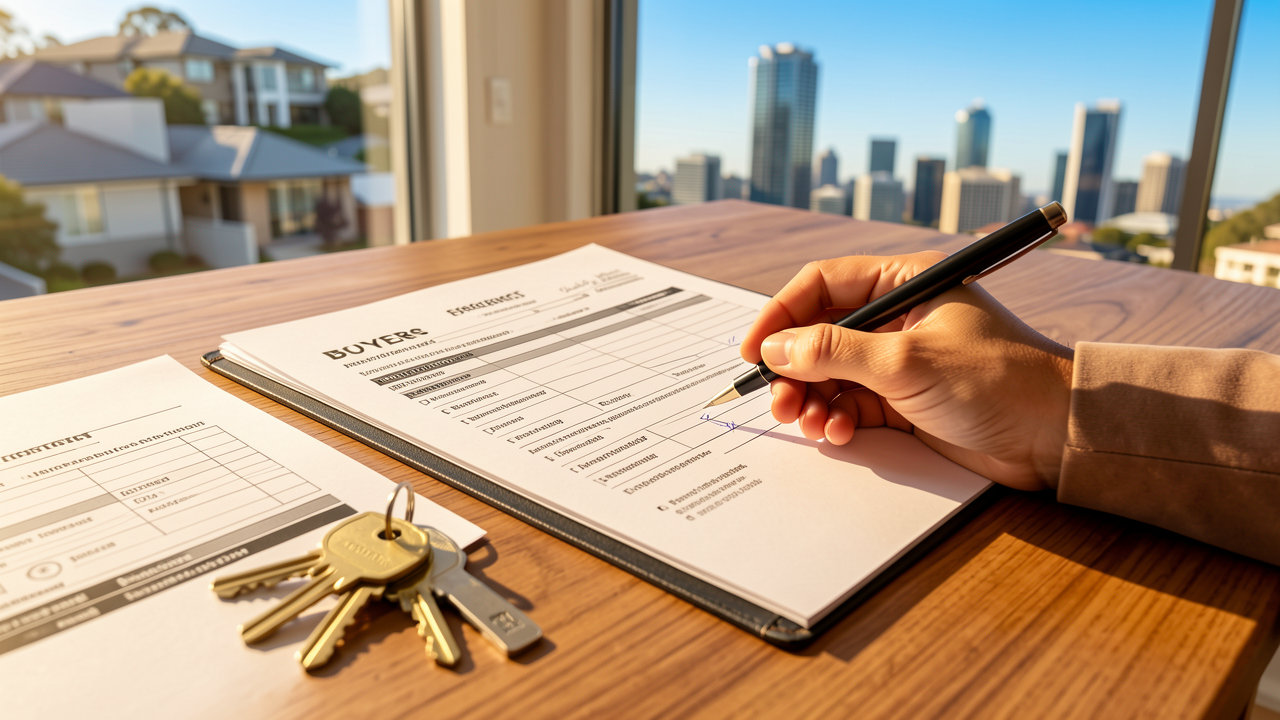
The short answer: The best buyers agent in Sydney combines transparent fee structures, verifiable transaction history in your target suburbs, and a clear process for negotiation and due diligence. Look for licensed professionals who can show recent comparable purchases, explain their conflict-of-interest protocols, and demonstrate measurable savings net of fees. For buyers priced out of their preferred lifestyle suburbs, rentvesting offers a way to enter the market without compromising on location or investment returns.
Finding the best buyers agent in Sydney shouldn't feel like guesswork. Yet most buyers start their search with vague criteria, "experienced", "local expert", "trusted", and end up comparing marketing claims rather than measurable outcomes.
The Sydney property market moved $140 billion in residential transactions in 2026, according to CoreLogic data. That volume creates opportunity for buyers who know how to handle it, and confusion for those who don't. A buyers agent exists to shift the balance in your favour, but only if you choose correctly.
This article cuts through the noise. You'll learn how to evaluate agents based on verifiable track records, understand fee structures that align with your interests, identify red flags in service agreements, and recognise when a premium concierge model might serve you better than a traditional buyers agent. Whether you're purchasing your first home, building an investment portfolio, or relocating to Sydney, the framework here helps you make an informed decision.
Most buyer's agent websites look identical. They promise local knowledge, strong negotiation, and client-first service. The real differentiators emerge when you ask specific questions about their process, track record, and commercial structure.
The most effective filter comes from a Reddit discussion in r/AusPropertyChat: ask any prospective agent to describe their last three completed purchases. Not their best deals. Not cherry-picked case studies. The most recent three.
What you're listening for: the client's objective, the suburbs searched, the properties shortlisted, the negotiation strategy, the final price versus comparable sales, and the outcome net of fees. An agent with a strong process can walk you through this in detail. An agent relying on marketing can't.
This question also reveals specialisation. If you're buying in the Inner West and their last three deals were all on the Northern Beaches, that's useful information. If you're an investor and their recent transactions were all owner-occupier purchases, that tells you something about their network and expertise.
In New South Wales, buyers agents must hold a Class 2 licence under the Property and Stock Agents Act 2002. You can verify any agent's licence status through NSW Fair Trading's public register. This takes two minutes and eliminates unlicensed operators.
Professional indemnity insurance is equally important. It protects you if the agent makes an error that costs you money, missing a building defect, failing to identify a planning restriction, or providing incorrect advice about market value. Ask for proof of current cover and the policy limit. Reputable agents provide this without hesitation.
Fee structures reveal incentives. The best buyers agent in Sydney uses a model that rewards them for achieving your outcome, not just completing a transaction.
Buyers agents in Australia typically charge either a fixed fee or a percentage of the purchase price. Fixed fees commonly range from $8,000 to $20,000 depending on the property type and search complexity. Percentage-based fees sit between 1% and 3% of the purchase price. Understanding how Sydney buyers agent fees break down across different service models helps you assess whether the cost justifies the outcome in your specific situation.
The mathematics matter. On a $1 million purchase, a 2% fee is $20,000. A fixed $15,000 fee saves you $5,000. But percentage models create a subtle misalignment: the agent earns more when the price goes up, yet your interest is to pay less.
Fixed fees align better with buyer interests because the agent's compensation doesn't increase with the purchase price. Their incentive is to secure the property at the best possible price and move to the next client, not to push the price higher to increase their own commission.
Some agents charge an upfront retainer, typically $2,000 to $5,000, with the balance payable on successful purchase. This model filters serious buyers and compensates the agent for search work even if no purchase proceeds.
The risk for buyers is paying the retainer and receiving minimal effort. Before engaging, clarify what the retainer covers: how many properties will be inspected, how many suburbs will be searched, what reports will be provided, and what happens if you decide not to proceed.
Success fees, where the agent is paid only if a purchase completes, sound buyer-friendly but can create pressure to close a deal even if the property isn't fairly right. The best structure balances commitment on both sides: a modest retainer that reflects real work, and a success component that rewards the right outcome.
Sydney's property market isn't uniform. The factors that drive value in Mosman differ entirely from those in Parramatta or Campbelltown. The best buyers agent in Sydney either specialises deeply in specific areas or maintains a network that does.
Suburbs like Paddington, Surry Hills, Woollahra, Rose Bay, and Mosman operate on scarcity, heritage overlays, and proximity to the CBD and harbour. Buyers agents working these areas need to understand strata title complexities, conservation area restrictions, and the premium attached to specific streets or aspects.
According to Domain's 2025 market data, median house prices in the Eastern Suburbs exceeded $3 million, with top-tier properties transacting above $10 million. At this level, off-market opportunities and relationships with selling agents become critical. An agent without established networks in these postcodes will struggle to access the best stock before it reaches public listing.
Cohen Handler, a Sydney-based firm founded in 2009, lists recent purchases in Rose Bay, Balmain, and Elizabeth Bay. Their positioning emphasises transaction volume, they claim involvement in more than $7 billion in property purchases, and suburb-level expertise across metropolitan Sydney.
For investors and first-home buyers, the opportunity often sits in growth corridors: the North West (Rouse Hill, Kellyville), South West (Oran Park, Leppington), and Western Sydney (Parramatta, Penrith). These areas offer stronger rental yields and more accessible entry prices than the inner city.
Buyers agents operating in these markets need different expertise: understanding infrastructure projects (Metro rail extensions, motorway upgrades), assessing new-build quality and developer reputation, and modelling rental yields against holding costs. The due diligence process for a $600,000 house-and-land package in Marsden Park is fundamentally different from a $2 million terrace in Balmain. If your investment strategy targets growth corridors rather than established inner-city markets, working with a buyers agent in Western Sydney who understands infrastructure timelines and developer quality becomes essential.
If your strategy involves building a portfolio rather than purchasing a single home, the agent's ability to identify high-yield, positively cashflowed properties in growth areas becomes the primary selection criterion.
| Factor | What it is | Impact |
|---|---|---|
| Verified transaction history | Recent comparable purchases in target suburbs | Proves local expertise and negotiation outcomes |
| Fee structure alignment | Fixed fee or success-based model | Determines whether agent incentives match yours |
| Suburb specialisation | Deep knowledge of specific postcodes | Access to off-market stock and accurate valuations |
| Licensing and insurance | Class 2 NSW licence and PI cover | Legal protection and professional accountability |
| Service scope | Search, negotiation, due diligence, settlement | Defines what you're actually paying for |
The best buyers agent in Sydney doesn't just find properties and negotiate. They manage the entire acquisition process from strategy through to settlement, reducing risk and saving time at every stage.
Before any property search begins, a competent buyers agent conducts a financial assessment: your borrowing capacity, deposit position, existing equity, and investment goals. This prevents wasted effort searching in the wrong price range or property type.
For investors, this stage should include cashflow modelling. What rental yield do you need to achieve positive or neutral cashflow? How does depreciation affect your after-tax position? What does your borrowing capacity look like after this purchase, can you buy again in 12 months, or does this property consume all available serviceability?
Agents who skip this step and jump straight to property search are doing you a disservice. The property should serve the strategy, not the other way around.
Once a property is identified, due diligence separates good agents from mediocre ones. This includes building and pest inspections, strata report review (for apartments and townhouses), contract review with a solicitor, comparable sales analysis, and council zoning checks.
A 2024 study by the Real Estate Buyers Agents Association of Australia found that 68% of buyers who used a buyers agent reported discovering issues during due diligence that would have been missed otherwise. These ranged from structural defects to planning restrictions that limited future renovation potential.
Settlement coordination is the final step: liaising with solicitors, lenders, and selling agents to ensure all conditions are met and the transaction completes on time. Buyers agents who stay involved through settlement reduce the risk of last-minute complications that can delay or derail the purchase.
If you're looking for a model that extends beyond traditional buyers agent services, integrating strategy, property sourcing, finance coordination, and portfolio construction into a single process, book a call to explore how a premium investment concierge approach might suit your situation.
Ready to take the next step with Somerstone Property Group?
Our team is ready to help you achieve your goals. Book a discovery call. Buyers building interstate portfolios should apply the same evaluation framework when selecting the best buyers agent in Melbourne, where market dynamics and regulatory requirements differ from Sydney.
Sydney's buyers agent market includes large, established firms with multi-state operations and boutique operators who work solo or with small teams. Neither is inherently better, the right choice depends on your priorities.
Established buyers agent firms offer structured processes, multiple agents covering different suburbs, and the capacity to handle high transaction volumes. Propertybuyer, founded by Rich Harvey, and HighSpec Properties, led by Amanda Gould with more than 30 years of real estate experience, are examples of firms operating at scale across Sydney and beyond.
HighSpec Properties employs a team of 10 people across two offices, covering Sydney, Byron Bay, and the Northern Rivers. This scale allows them to service buyers across a wide geographic area and maintain coverage even when individual agents are unavailable.
The trade-off is personalisation. In a large firm, you may work with different team members at different stages, and the principal agent you initially met may not be the person conducting inspections or negotiating on your behalf. For buyers who value consistency and a single point of contact, this can be a drawback.
Boutique buyers agents typically work alone or with a small team, offering a more personalised service and often deeper specialisation in specific suburbs or property types. They may have stronger relationships with selling agents in their target areas because they operate in a smaller geographic footprint.
The limitation is capacity. A solo operator can only manage a limited number of active searches at once, which may mean longer wait times or reduced availability during peak buying periods.
Some firms operate outside the traditional buyers agent model entirely. Somerstone Property Group, for example, positions itself as a Premium Investment Concierge rather than a buyers agent. Their model integrates strategy, property sourcing across three states, finance coordination, and portfolio construction into a single process. For investors building multi-property portfolios, this approach addresses the gap between one-off buyers agent transactions and long-term wealth strategy.
Certain practices and claims should immediately disqualify a buyers agent from consideration. Recognising these red flags protects you from poor outcomes and wasted fees.
The most serious red flag is undisclosed commercial relationships with developers, builders, or selling agents. Some buyers agents receive referral fees or commissions from developers when they place clients into new-build properties. This creates a direct conflict: the agent is financially incentivised to recommend properties that pay them, not properties that best suit your needs.
In New South Wales, buyers agents are legally required to disclose any commission or benefit they receive from third parties. If an agent recommends a property without disclosing that they receive a fee from the developer or builder, that is a breach of their fiduciary duty.
Before engaging any agent, ask directly: "Do you receive any commissions, referral fees, or other payments from developers, builders, or selling agents for properties you recommend?" If the answer is anything other than a clear "no" or a transparent explanation of disclosed arrangements, walk away.
Buyers agents who guarantee specific savings, promise access to properties "no one else can find", or claim they can secure any property regardless of competition are either inexperienced or dishonest. Property markets are competitive and unpredictable. No agent can guarantee outcomes. For properties in Mosman, Rose Bay, or Woollahra, engaging a buyers agent for Sydney's Eastern Suburbs with established selling agent relationships often determines whether you access off-market stock before it reaches public listing.
Similarly, be wary of agents who pressure you to move quickly on a property without adequate due diligence, or who dismiss your concerns about price, condition, or location. A good agent provides advice and manages the process, but respects that you make the final decision.
According to a 2025 report by the Australian Securities and Investments Commission, property-related misconduct complaints increased 22% year-on-year, with undisclosed conflicts of interest and misleading claims among the most common issues. Protecting yourself starts with asking the right questions upfront.
The best buyers agent in Sydney is the one whose process, fee structure, and expertise align with your specific buying objective. Start by asking for recent transaction examples, verify licensing and insurance, and ensure fee arrangements reward the right outcome. Specialisation matters, an agent with deep knowledge of your target suburbs will outperform a generalist every time.
For investors building portfolios, consider whether a traditional buyers agent model or a broader investment concierge approach better suits your long-term strategy. The right choice depends on whether you're making a single purchase or constructing a multi-property wealth plan.
Ultimately, the agent's track record, transparency, and alignment with your interests matter more than their marketing. Do the due diligence on them before they do it on properties for you.
Ask for details of their last three completed purchases: client objective, suburbs searched, negotiation process, final price versus comparables, and outcome net of fees. Verify their NSW Class 2 licence through Fair Trading's public register and request proof of professional indemnity insurance.
Fees typically range from $8,000 to $20,000 fixed, or 1-3% of purchase price. Fixed fees align better with buyer interests because the agent's pay doesn't increase with the property price. Clarify what the fee covers: search, negotiation, due diligence, and settlement coordination should all be included.
For investment purchases, the agent must understand cashflow modelling, rental yield analysis, depreciation benefits, and borrowing capacity impacts. If you're building a portfolio, consider whether a traditional buyers agent or an investment concierge model better supports your long-term strategy and serviceability planning.
Ask directly: "Do you receive commissions or referral fees from developers, builders, or selling agents?" NSW law requires disclosure of any third-party payments. If an agent recommends properties without disclosing financial relationships with the seller or developer, that's a red flag.
Compare the agent's fee against measurable outcomes: purchase price versus comparable sales, time saved in search and negotiation, and issues identified during due diligence. A 2024 REBAA study found 68% of buyers using agents discovered problems that would have been missed, often worth more than the fee itself.
